
Table of Contents
Hardwood Investment: The Timeless Timber All Homes Desire
Why Hardwood Flooring Remains the Timeless Standard
Few materials carry hardwood's quiet authority. It is architectural in presence, personal in character, revered by discerning homeowners and celebrated by designers across every era. While trends shift and alternatives multiply, hardwood endures as the constant. What people are truly investing in when they explore hardwood flooring prices isn't just a surface. It's an aesthetic.
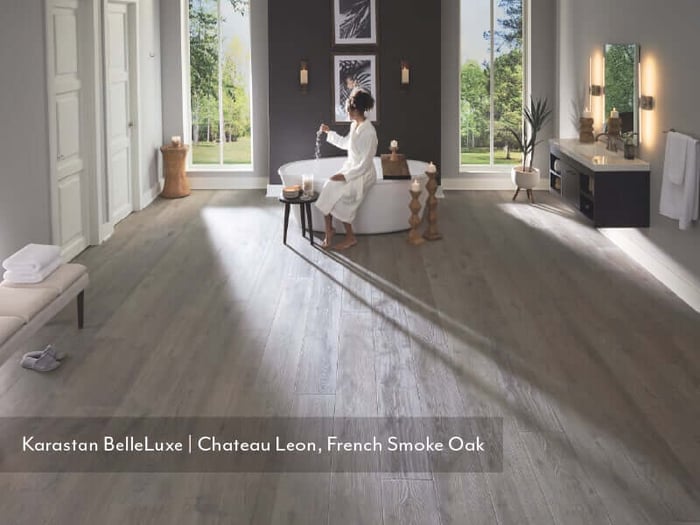
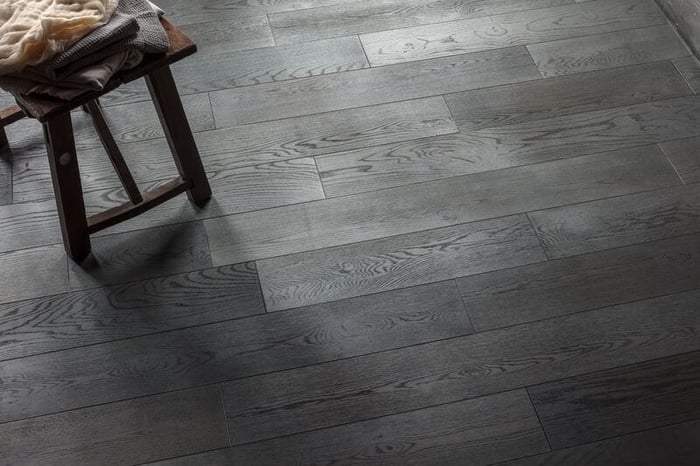
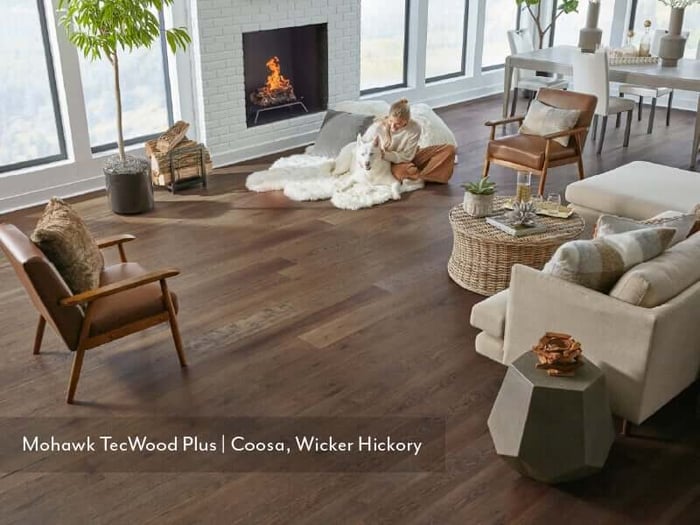
What sets hardwood apart is its classic appeal. Each plank carries the unrepeatable signature of a living tree with mineral streaks, tonal variation, and grain formations no machine can manufacture. It's also luminously alive with warm amber and honey tones emerging under morning light, deepening into something richer and more dramatic by afternoon. A floor that shifts with the hours, composing new arrangements of light and shadow with every passing moment.
Within hardwood's distinguished category, one essential distinction shapes both performance and perception, namely the choice between solid and engineered hardwood.
Two Distinctions in Design
Solid hardwood embodies authenticity in its purest form: a plank milled from a single, continuous piece of timber, free of layers or composites. It can be refinished multiple times across generations, renewing its surface while preserving its integrity. It isn't simply a durable material—but one that endures, adapts, and can be genuinely renewed.
The one caveat is that same natural responsiveness. This means solid wood that expands and contracts with shifts in moisture and temperature. This makes it best suited for above-grade installations in well-controlled environments. In the right conditions, it's barely noticeable. In the wrong ones, gapping or cupping can occur (which is not a flaw) but simply the nature of wood.
Engineered hardwood offers a more contemporary interpretation. A genuine hardwood surface is layered over a stable plywood or high-density fiber core, delivering the same visual richness with greater dimensional stability across varying conditions. High-quality engineered hardwood is nearly indistinguishable from solid wood, with the difference lying beneath, where its construction allows for wider environmental compatibility and flexibility.
The trade-off is refinishing potential, which depends on the thickness of its wear layer. But for many spaces and lifestyles, engineered hardwood isn’t a compromise, but a considered choice.
How Wood Species Shape Hardwood Costs
Species are often the primary driver of price, and each tier carries its own character.
Red oak and ash anchor at the accessible end. It’s dependable, timeless, and broadly appealing. In the mid-range, hickory and maple distinguish themselves through exceptional hardness and expressive grain.
American white oak and walnut define the premium tier, valued for depth of color, quiet complexity, and architectural presence. At the very top, European white oak stands as a benchmark of elevated craftsmanship, often internationally sourced and distinguished by strong sustainability credentials.
The Cost of Going Wide
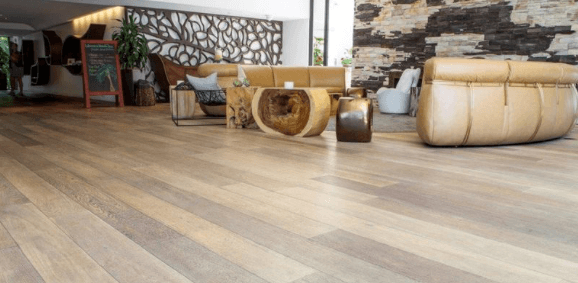
Wide-plank flooring has become one of the most coveted expressions in residential design, and for good reason. Broader boards create a sense of quiet expansiveness, with fewer seams, more visual continuity, and a floor that reads like a single and fluid surface. The result is rhythmic, refined, and deeply compelling. This elevated aesthetic comes with natural considerations. Wider planks require higher-grade lumber, more selective sourcing, and a more precise milling process to ensure stability and flatness. The investment rises accordingly, and so does the presence. In the right space, wide-plank flooring is nothing short of beautiful.
The Importance of Wear Layer
At 2mm, refinishing is technically possible but narrow in margin. A 4mm layer typically allows two to three cycles, each revealing fresh and unblemished wood beneath. At 6mm, four or more refinishing cycles become possible, representing reduced disruption and the embodied value of material that simply never needs to be discarded. Beyond longevity, a thicker wear layer provides enhanced resistance to denting, scratching, and the micro-abrasions that quietly accumulate from daily life.
Subfloor Preparation: The Work Beneath
Hardwood demands a flat and stable foundation. Before a single board is placed, the subfloor must be inspected and corrected through grinding, patching, and securing any uneven or loose sections. This step is frequently underestimated, yet it defines the long-term performance of everything above it. It's also often what separates a comprehensive installation quote from a lower one.
Moisture Acclimation: An Essential Consideration
Wood is a living material. It expands when there’s humidity and contracts in dryness, so a professional installation accounts for this from the beginning. Moisture levels in both the subfloor and the incoming hardwood must be measured, and the flooring itself must adapt to your home’s temperature with ambient conditions before it is permanently fastened.
Price Transparency
At Lewis, professionally installed hardwood flooring is typically priced across three tiers. Each reflects not only a different product specification, but a different performance expectation—from everyday durability to premium investments. The chart below illustrates what a 500-square-foot installation might realistically cost across each tier, including both materials and professional installation. These figures provide a meaningful baseline for project planning.
Solid Hardwood
Tier | Installed Per SF | 500 SF Total |
Good | $15.50 – $18.50 | $7,750 – $9,250 |
Better | $18.50 – $25.00 | $9,250 – $12,500 |
Best | $25.00 – $35.00+ | $12,500 – $17,500+ |
Engineered Hardwood
Tier | Installed Per SF | 500 SF Total |
Good | $14.00 – $17.50 | $7,000 – $8,750 |
Better | $17.50 – $22.00 | $8,750 – $11,000 |
Best | $22.00 – $32.00+ | $11,000 – $16,000+ |
*Note: All solid and engineered hardwood pricing figures are presented as ballpark estimates. Every home requires a unique layout. Preparation requirements, demolition scope, and product selection all influence the final investment. Monthly payment examples reflect our standard 10-year financing program at 9.99%. Precise laminate pricing is available only following an in-home consultation.
Ready For More Iconic Hardwood Floors?
Ready to get started on your hardwood investment? Meet with any of our trusted designers and join us at our iconic showroom where you can get a full look at even more tiles with style. Whether it’s for your next sophisticated bathroom made of glossy glamour or timeless hardwood made with the authenticity of nature.